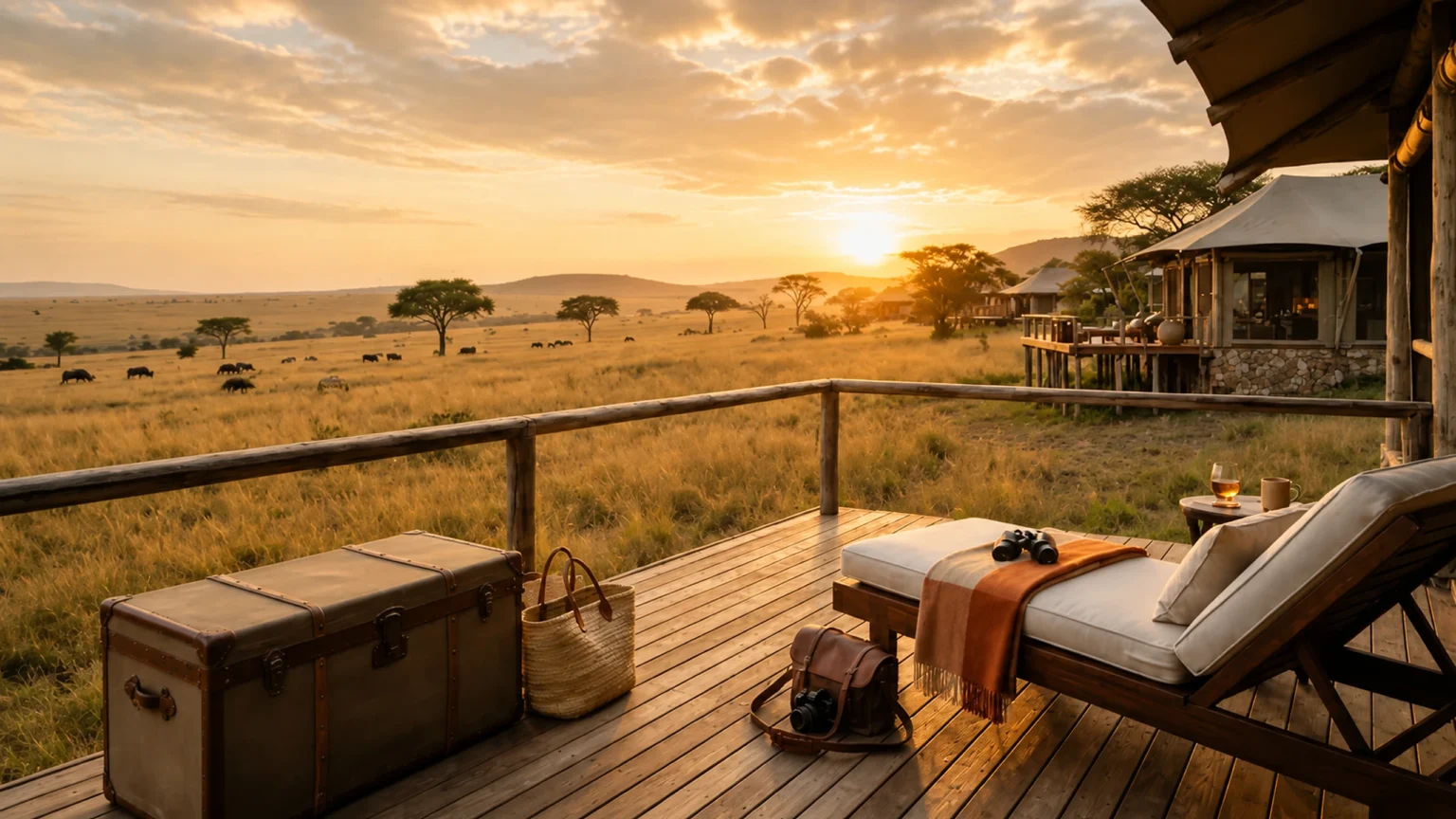
“Tented camp” makes some first-timers nervous and others sceptical of the price. Both relax on arrival. Here is what staying at a luxury safari lodge is actually like, hour by hour. For the calendar side of the decision, see the best time for an African safari.
The rhythm of a safari day
5:30 — a gentle wake-up call with coffee brought to your tent. 6:00–9:30 — morning game drive, when the bush is coldest and busiest; blankets and hot-water bottles in the vehicle are standard. Late morning — enormous breakfast, then the sacred siesta hours: pool, deck, watching elephants from your daybed. 16:00 — afternoon tea, then the evening drive, ending with sundowners — gin and tonic poured on a ridge as the light goes gold. 20:00 — dinner under lanterns, sometimes in the bush itself. You will sleep like a child.
The rooms: tents in name only
Expect proper beds, en-suite bathrooms, hot showers (sometimes outdoor ones with a view), electricity or generous solar power, and often a private plunge pool. The canvas is the point: you hear the night — lion far off, hippo surprisingly close. Guests fall in love with exactly that. Pack for it properly — our packing guide covers the soft-bag, 15 kg reality of light aircraft.
Food and drink
Remote locations produce astonishing kitchens. Most luxury safari lodges are fully inclusive: all meals, house wines and spirits, laundry and two daily activities. Dietary requirements handled effortlessly — tell your planner once and every camp on the route will know.
Guides make the safari
The difference between a good week and an unforgettable one is almost always the guide. Private vehicles and top guides cost more and are worth it — you set the pace, linger at sightings and learn ten times as much. It is also what turns a honeymoon safari into something private rather than shared with five strangers. If this is your first, our first safari guide covers the decisions that come before this one.
Practical notes
- Tipping: plan roughly €15–€25 per guest per day for guides, and a similar pooled amount for camp staff — guidelines come with your itinerary.
- Wi-Fi: usually in the tent or main area, rarely fast. Consider that a feature.
- Safety: camps are unfenced but escorted after dark; briefings are thorough. Incidents are vanishingly rare.
- Children: many lodges welcome kids from 6+, with dedicated family units and junior-ranger programmes — see family travel.
Choosing between camps is where expertise pays — the differences rarely show in photographs. See how we match camps to travellers or ask us directly.
The Camps We Choose
The differences between camps rarely show in photographs. That is the whole job.